Revolver (Philip Lombard's)
Philip Lombard's revolver is one of the most consequential objects in And Then There Were None, a weapon whose presence, disappearance, and reappearance shape the final stages of the island's murder sequence. It is the only firearm known to be on Indian Island, and its movements—from Lombard's pocket to a hidden cache, back to his drawer, and finally into Vera Claythorne's hands—trace the shifting balance of power and suspicion among the last survivors.
Identity and Introduction
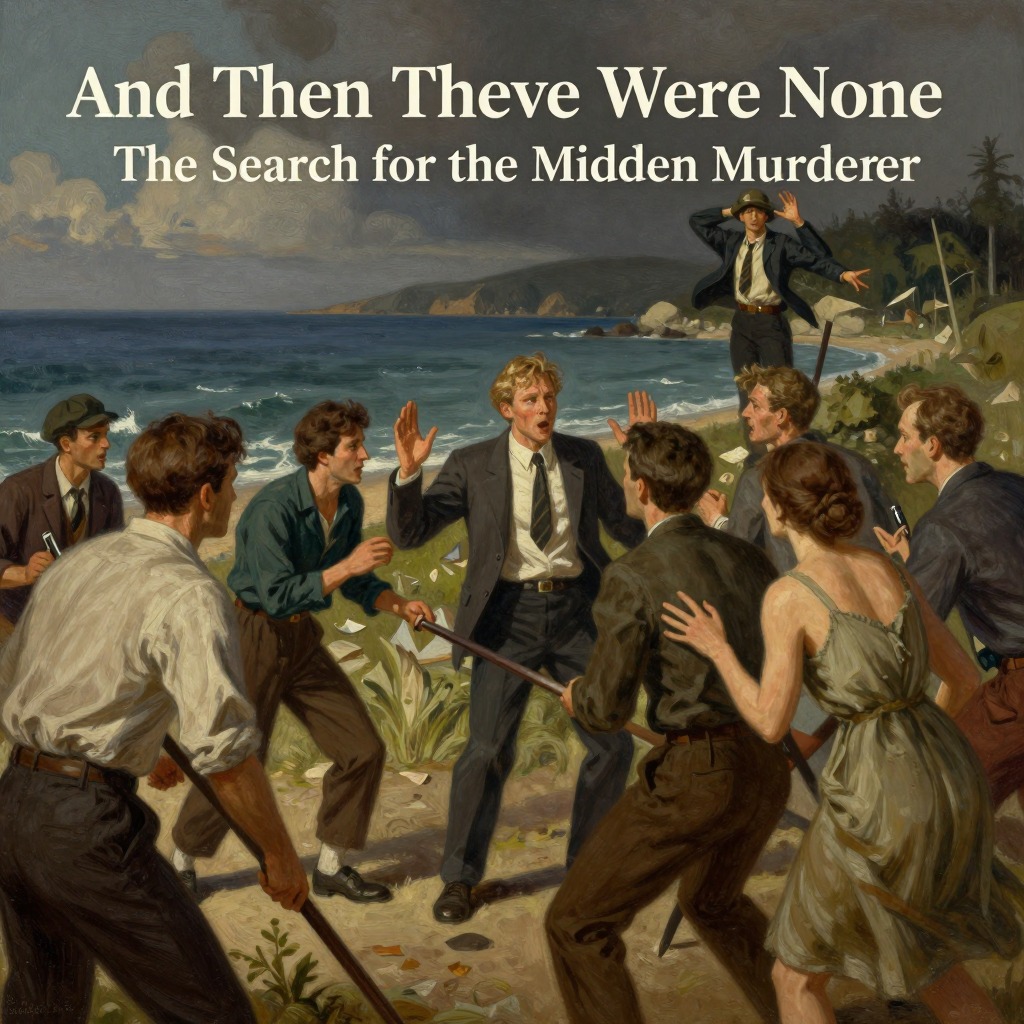
Lombard arrives on Indian Island carrying a revolver, a fact he reveals only when the three men—Lombard, Dr. Armstrong, and William Henry Blore—begin searching the island for a hidden murderer. When Blore asks if anyone has a revolver, Lombard pats his pocket and says, "I've got one" . Blore's eyes open very wide, and he asks in an over-casual tone, "Always carry that about with you, sir?" Lombard replies, "Usually. I've been in some tight places, you know" (E01220–E01222). The revolver immediately marks Lombard as a man of action and potential danger, and Blore later confides to Armstrong that he considers Lombard "a wrong 'un" and that the revolver is suspicious: "It's only in books people carry revolvers around as a matter of course" .
Theft and Disappearance
The revolver becomes a flashpoint of mistrust after the deaths of Anthony Marston, Mrs. Rogers, and General Macarthur. When the judge, Lawrence John Wargrave, proposes that all weapons and drugs be collected and locked away, Lombard resists: "I'm damned if I'll give up my revolver!" . Wargrave threatens him with force from Blore and the others, and Lombard reluctantly agrees, saying, "Oh, very well then. Since you've got it all taped out" . He states that the revolver is "in the drawer of the table by my bed" . But when the group goes to retrieve it, Lombard jerks open the drawer and recoils with an oath: the drawer is empty . The revolver has been stolen.
Its disappearance throws suspicion onto Lombard himself, but a thorough search of all five survivors—including Vera, who submits to a search in her bathing dress—finds no weapon or drugs on anyone (E02134–E02142). The revolver remains missing, and Wargrave observes that the murderer has had plenty of time to devise a hiding place . The search of the house from attic to cellars yields nothing .
Reappearance and Climax
The revolver resurfaces in the most unexpected way. After the staged death of Wargrave and the disappearance of Armstrong, Blore hears footsteps in the night and pursues a figure he believes to be Armstrong. Lombard joins him, and as they prepare to hunt the missing doctor, Lombard reveals: "I've got that revolver!" He takes it half out of his pocket, explaining, "Found it put back in my drawer to-night" (E02475–E02476). Blore stops dead on the doorstep, his face changing, and Lombard says impatiently, "Don't be a damned fool, Blore! I'm not going to shoot you!" . The revolver's return—placed back exactly where it was stolen—is a baffling act that Lombard himself cannot explain: "I haven't the least idea. It's just crazy. The last thing one would expect. There seems no point in it" (E02542–E02543).
Blore refuses to believe Lombard's story, arguing that the revolver could have been in Lombard's possession all along, hidden before the search and then retrieved (E02537–E02540). The weapon becomes the final wedge between the last three survivors: Lombard, Blore, and Vera.
Vera's Use and the Final Deaths
After the discovery of Armstrong's drowned body, Vera and Lombard face each other alone on the island. Lombard's face appears to her as a wolf's, and he snarls, "This is the end, you understand" . Vera, feigning womanly pity, helps him drag Armstrong's body above the tide line, and during the effort she picks Lombard's pocket, taking the revolver (E02721–E02722). She steps back, revolver in hand, and Lombard, realizing his danger, tries to talk her down and then springs at her. "Quick as a panther," he leaps, and Vera automatically presses the trigger. Lombard's body crashes to the ground, shot through the heart (E02729–E02732).
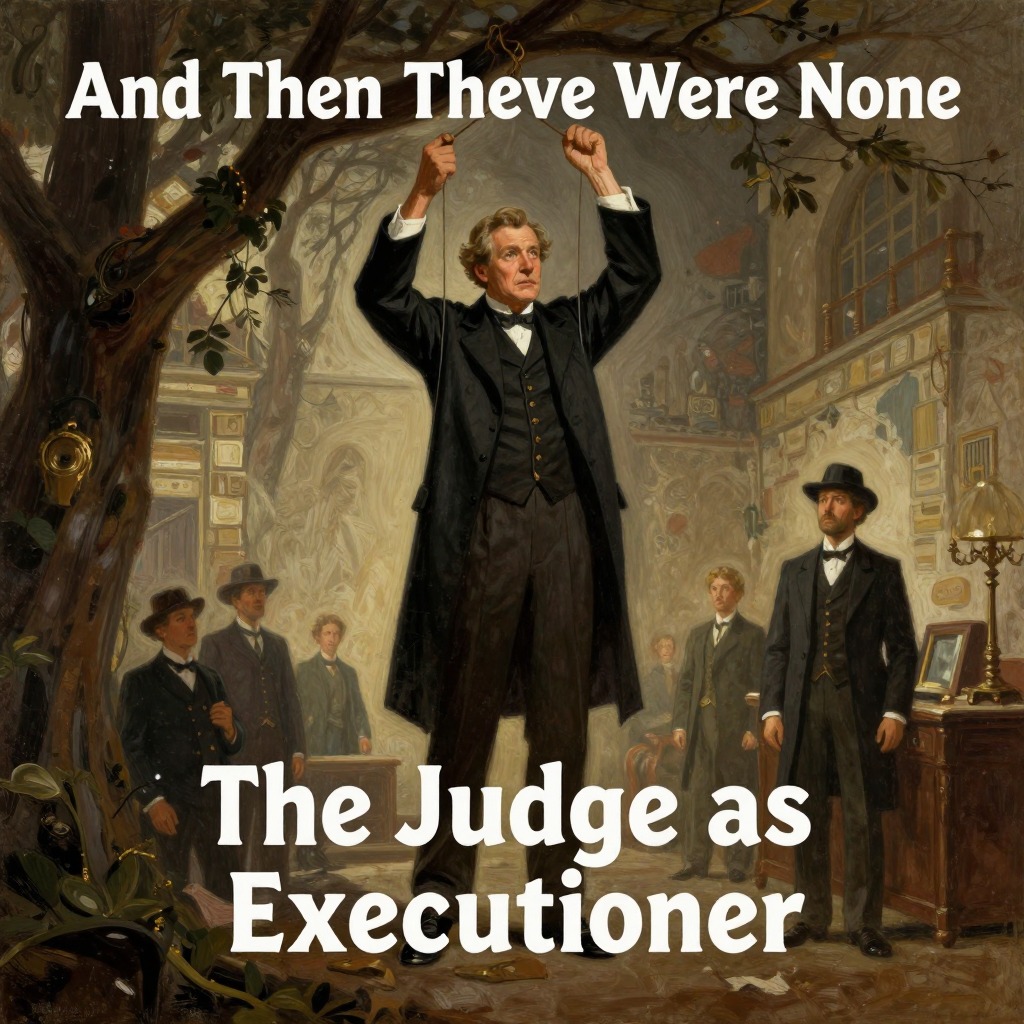
Vera, holding the revolver, experiences a moment of exquisite relief, believing she is now alone and safe on the island (E02734–E02739). She drops the revolver at the top of the stairs without noticing, and it is later found there by the police, bearing her fingerprints . The revolver's final role is in Wargrave's suicide: he retrieves it, preserves Vera's fingerprints on it, and uses it to shoot himself, rigging an elastic cord to make the weapon fall away from his body, creating the illusion that he was murdered (E02986–E02987).
Thematic Significance
The revolver embodies the collapse of trust and the raw struggle for survival. It passes from Lombard, a man who admits he has "sailed pretty near the wind" and who carries a weapon out of habit, to Wargrave, the mastermind who steals it, then back to Lombard, and finally to Vera, who uses it to kill. Each transfer marks a shift in who holds power and who is suspected. The revolver's theft and return—a "crazy" act that serves no practical purpose except to deepen confusion—reflects the novel's larger theme of a meticulously planned but seemingly irrational justice. In the end, the revolver is both the instrument of Vera's temporary triumph and the tool of Wargrave's final, self-inflicted sentence.